
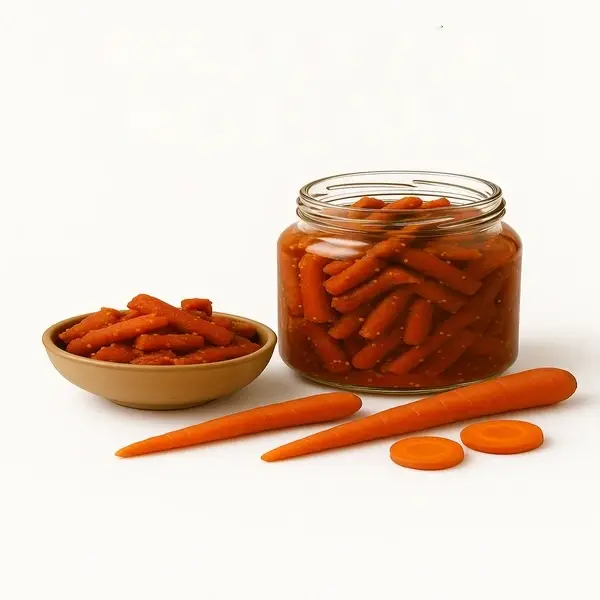
🥕 Carrot Pickle (Gajar ka Achar): A Vibrant Blend of Crunch, Spice, and Tradition
It is not just an accompaniment; it is a reflection of seasonal eating, traditional preservation methods, and the Indian philosophy of transforming simple vegetables into long-lasting, flavorful food. With its striking color and robust taste, gajar ka achar adds life to even the simplest meals.
🥕 What Is Carrot Pickle?
It is a traditional Indian pickle made from fresh carrots cut into long pieces or chunks and preserved using salt, spices, and oil. In many regions, carrots are lightly sun-dried before pickling to reduce moisture and enhance shelf life. The pickle matures over time, allowing the carrots to absorb spices and oil while retaining a pleasant bite.
Unlike fruit pickles, it offers a vegetable-forward flavor that is earthy, mildly sweet, spicy, and aromatic. It is often prepared fresh in winter and enjoyed throughout the season.
🏺 Cultural Importance of Gajar ka Achar
Families would prepare it in batches, storing it in ceramic or glass jars and placing them under sunlight for natural maturation. Recipes were passed down orally, with each household adjusting spice levels and oil quantity according to taste and climate.
Gajar ka achar often evokes memories of home-cooked winter meals, fresh rotis, and the warmth of traditional kitchens.
🥕 Choosing the Right Carrots for Pickle
The quality of it depends largely on the type of carrots used.
Ideal carrots for pickle:
-
-
Fresh, firm, and crisp
-
Naturally sweet
-
Deep orange or red in color
-
Low water content
-
Traditional desi carrots, available in winter, are preferred because they are less watery and absorb spices better than hybrid varieties.
🌾 Spices Used in Authentic Carrot Pickle
Spices are the backbone of it, giving it warmth, depth, and shelf stability.
Commonly used spices:
-
-
Mustard seeds – sharpness and preservation
-
Fenugreek seeds – mild bitterness and aroma
-
Fennel seeds – subtle sweetness
-
Red chilli powder – heat and color
-
Turmeric powder – color and antimicrobial properties
-
Asafoetida – enhances flavor and digestion
-
These spices are usually coarsely ground to give texture and strong aroma.
🛢️ Role of Oil in Carrot Pickle
Oil is a crucial element in carrot pickle preparation. Traditionally, cold-pressed mustard oil is used in North Indian recipes.
Importance of oil:
-
-
Acts as a natural preservative
-
Prevents moisture contamination
-
Enhances spice infusion
-
Adds pungent aroma
-
The oil coats carrot pieces, protecting them while allowing the pickle to mature slowly.
🏺 Traditional Preparation Process of Carrot Pickle
Step 1: Cleaning and Cutting
Fresh carrots are washed thoroughly, peeled if necessary, and cut into long sticks or chunks.
Step 2: Drying
Carrot pieces are sun-dried or air-dried for a few hours to remove surface moisture.
Step 3: Spice Preparation
Whole spices are lightly roasted and coarsely ground. Salt and turmeric are added.
Step 4: Mixing
Carrots are mixed thoroughly with the spice blend and oil until evenly coated.
Step 5: Sun Maturation
The pickle is transferred to clean glass jars and kept under sunlight for several days.
Step 6: Aging
Over time, the carrots soften slightly, absorb spices, and develop a rich, balanced flavor.
🌶️ Taste Profile of Gajar ka Achar
Carrot pickle offers a well-rounded taste:
-
-
Mild sweetness from carrots
-
Spicy warmth from chillies
-
Slight bitterness from fenugreek
-
Strong aroma from mustard oil
-
As the pickle matures, flavors blend harmoniously, making it more complex and satisfying.
🍽️ How Carrot Pickle Is Traditionally Eaten
Carrot pickle is enjoyed in small quantities but enhances meals significantly.
It pairs well with:
-
-
Roti or paratha
-
Dal and rice
-
Khichdi
-
Curd-based meals
-
Its crunch and spice provide contrast to soft, mild foods.
❤️ Health Aspects of Carrot Pickle (When Consumed in Moderation)
-
-
Carrots provide fiber and natural nutrients
-
Spices stimulate digestion
-
Oil aids absorption of fat-soluble nutrients
-
Naturally preserved without artificial additives
-
⚠️ Due to salt and oil content, moderation is advised.
🏡 Storage and Shelf Life of Carrot Pickle
Proper storage ensures freshness and safety:
-
-
Store in airtight glass jars
-
Always use a dry spoon
-
Keep carrot pieces submerged in oil
-
Avoid moisture exposure
-
When stored correctly, carrot pickle can last 6 months to over a year.
🌍 Regional Variations of Carrot Pickle
Carrot pickle varies across regions:
-
-
North Indian style: mustard oil and strong spices
-
Punjabi style: slightly tangy and bold
-
Rajasthani style: oil-rich and very spicy
-
Despite variations, the essence remains the same—bold, preserved flavor.
🥕 Carrot Pickle in Modern Times
Today, carrot pickle continues to be relevant:
-
-
Loved for its color and crunch
-
Preferred as a seasonal pickle
-
Used in traditional and modern meals
-
Valued for its authentic preparation
-
As interest in traditional foods grows, gajar ka achar remains a favorite.
🌟 Why Carrot Pickle Remains Timeless
Carrot pickle has endured because it:
-
-
Uses seasonal vegetables
-
Preserves food naturally
-
Adds variety to meals
-
Reflects Indian culinary wisdom
-
It shows how simple ingredients can create long-lasting flavor.
✨ Conclusion
Carrot pickle is a vibrant and flavorful expression of Indian tradition. With its crunchy texture, aromatic spices, and natural sweetness, gajar ka achar offers a unique balance that appeals to all age groups. Prepared with care and patience, it transforms fresh carrots into a condiment that lasts for months while improving in taste.
A small spoon of carrot pickle carries warmth, spice, and tradition—making it a cherished companion on the Indian dining table.