
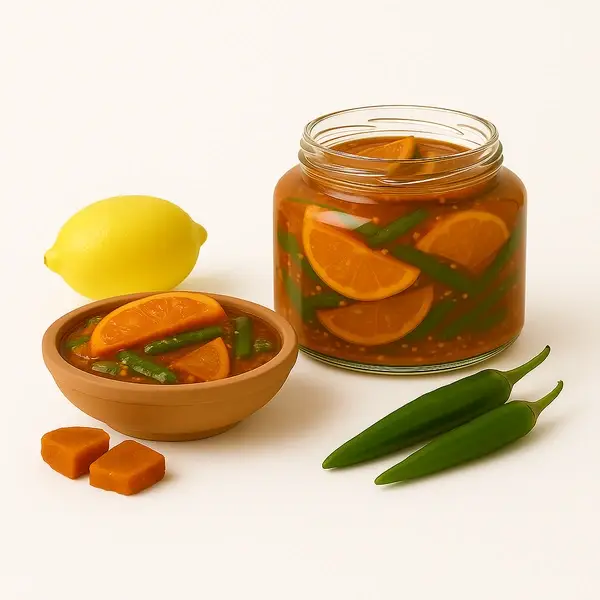
Lemon Chilli Pickle: The Perfect Fusion of Tangy Lemons and Spicy Green Chillies
Lemon Chilli Pickle, popularly known as Nimbu Mirch ka Achar, is one of the most refreshing and flavorful traditional Indian pickles. This classic Indian condiment perfectly combines the natural sourness of fresh lemons with the sharp heat of green chillies, creating a bold, tangy, and spicy taste that enhances even the simplest meals. Whether served with dal rice, paratha, khichdi, or curd rice, it adds a burst of flavor that instantly elevates the dining experience.
Among the many varieties of Indian pickles, it holds a special place because of its simplicity, digestive properties, and long shelf life. Unlike many heavy oil-based pickles, this achar often relies on lemon juice as a natural preservative, making it lighter yet equally flavorful. Because of this, it is often considered one of the most practical and everyday pickles in Indian households.
It also represents the Indian tradition of preserving seasonal produce using natural ingredients. With just lemons, chillies, salt, and spices, families have been making this pickle for generations, proving that great taste does not require complex ingredients—just the right balance and patience.
What is Lemon Chilli Pickle?
Lemon chilli pickle is a traditional Indian condiment made using fresh lemons, green chillies, salt, and traditional spices, sometimes combined with mustard oil for added preservation and flavor. The natural acidity of lemon acts as a preservative, while salt helps draw moisture and prevent spoilage.
This pickle is known for its unique taste profile which includes:
-
Tangy citrus flavor from lemon
-
Spicy heat from green chilli
-
Slight bitterness from lemon peel
-
Warm aroma from Indian spices
As the pickle matures, the lemon peel becomes softer, the chillies absorb sourness, and the spices blend into a deep, complex flavor. This natural maturation process is what makes traditional it special.
Cultural Importance of Lemon Chilli Pickle in Indian Food Tradition
Lemon pickle has been a part of Indian culinary heritage for centuries. In many households, it is one of the first pickles people learn to prepare because it is relatively simple compared to mango or mixed vegetable pickles.
Traditionally, it was prepared when lemons were available in abundance. Families would buy lemons in bulk, prepare pickle jars, and store them for year-round use. This practice reflected the Indian philosophy of seasonal preservation.
In many Indian homes, lemon pickle is also considered part of daily digestive support. It is often served with heavy meals because the sourness stimulates digestion and appetite. Even today, many traditional Indian thalis include lemon pickle because of its ability to balance flavors.
In some regions, lemon and chilli are also considered symbols of protection from negative energy. This cultural symbolism further strengthens the connection of it with Indian tradition.
Why Lemon and Green Chilli Work So Well Together
The pairing of lemon and green chilli is based on culinary balance.
Lemon provides:
-
Natural acidity
-
Fresh citrus aroma
-
Preservation properties
-
Digestive benefits
Green chilli provides:
-
Heat
-
Sharp flavor
-
Appetite stimulation
-
Depth of taste
Together they create harmony. The sourness balances the chilli heat, while the chilli prevents the lemon from tasting overly acidic. This balance makes it both exciting and enjoyable.
Selecting the Best Lemons for Pickle
Choosing the right lemons is crucial for making high-quality lemon pickle.
Ideal lemons should be:
-
Thin skinned
-
Juicy
-
Bright yellow
-
Firm to touch
-
Free from soft spots
Thin-skinned lemons are preferred because they soften better during pickling and absorb spices more easily. Thick-skinned lemons may take longer to mature.
Freshness is important because older lemons may have dry pulp and less juice, which affects both taste and preservation.
Choosing the Right Green Chillies
Green chillies are equally important in determining the taste of it.
Ideal chillies should be:
-
Fresh and crisp
-
Medium spicy
-
Deep green in color
-
Thick enough to hold texture
Some people prefer milder chillies for balanced flavor, while others prefer hot varieties for extra heat. The choice depends on personal taste preferences.
Chillies should always be free from wrinkles or softness, as this indicates aging.
Key Ingredients in Traditional Lemon Chilli Pickle
Authentic it uses simple and natural ingredients.
Main ingredients include:
-
Fresh lemons
-
Fresh green chillies
-
Salt
Traditional spice additions may include:
-
Mustard seeds
-
Fenugreek seeds
-
Turmeric powder
-
Red chilli powder
-
Asafoetida
-
Fennel seeds
Optional ingredients:
-
Mustard oil
-
Lemon juice
-
Black salt
Each ingredient contributes to flavor and preservation.
Salt prevents spoilage.
Spices add aroma.
Lemon juice preserves naturally.
Oil increases shelf life.
Traditional Method of Preparing Lemon Chilli Pickle
The preparation of it follows traditional preservation techniques.
Step 1: Washing and Drying
Lemons and chillies must be washed thoroughly to remove dirt. After washing, they must be dried completely. Even small amounts of moisture can spoil pickle.
Step 2: Cutting the Lemons
Lemons are usually cut into:
-
Quarters
-
Eighths
-
Small cubes
Seeds may be removed to reduce bitterness, though some traditional recipes keep them.
Step 3: Preparing the Chillies
Green chillies may be:
-
Slit lengthwise
-
Cut into pieces
-
Left whole
Slitting helps spices penetrate.
Step 4: Adding Salt
Salt is mixed first and left for several days. This helps soften lemon peel and release juice.
Step 5: Adding Spices
After softening, spices are added and mixed evenly.
Step 6: Sun Maturation
The mixture is stored in glass jars and kept in sunlight for several days or weeks. Sunlight helps natural fermentation and improves shelf life.
Taste Development During Pickle Maturation
One of the most interesting aspects of it is how its taste changes over time.
Initially:
-
Lemon tastes sharp
-
Chilli tastes very spicy
-
Peel may feel hard
After maturation:
-
Lemon becomes mellow
-
Peel softens
-
Spice blends evenly
-
Flavor becomes balanced
Properly matured it tastes deep, rounded, and harmonious.
Health Benefits of Lemon Chilli Pickle
When eaten in moderation, it offers several benefits.
Possible benefits include:
-
Supports digestion
-
Stimulates appetite
-
Provides antioxidants
-
Helps nutrient absorption
-
May support metabolism
Lemon contains vitamin C and natural acids.
Spices support digestion.
Fermentation may support gut health.
However moderation is essential due to salt content.
How Lemon Chilli Pickle Supports Digestion
Traditional Indian meals often include pickle not just for taste but for digestive support.
Lemon helps stimulate digestive juices.
Spices activate enzymes.
Salt helps electrolyte balance.
This is why pickle is often served with heavy foods like paratha or rice meals.
Best Ways to Eat Lemon Chilli Pickle
It pairs well with many Indian foods.
Popular combinations include:
-
Dal and rice
-
Stuffed paratha
-
Khichdi
-
Curd rice
-
Thepla
-
Poori
Even a small quantity adds significant flavor.
Storage Tips for Lemon Chilli Pickle
Proper storage ensures long shelf life.
Important tips:
-
Store in glass jars
-
Use airtight containers
-
Always use dry spoon
-
Keep away from moisture
-
Keep pickle submerged in juice or oil
Following these steps can keep pickle fresh for many months.
Shelf Life of Lemon Chilli Pickle
When prepared properly, It can last:
-
6 months
-
12 months
-
Sometimes longer
Shelf life depends on:
-
Salt quantity
-
Oil level
-
Moisture exposure
-
Storage method
Traditional pickles often improve in taste with time.
Regional Variations of Lemon Chilli Pickle
Different regions prepare it differently.
North Indian style:
-
Mustard oil based
-
Strong spices
Rajasthani style:
-
Very spicy
-
Oil rich
Gujarati style:
-
Slight sweetness sometimes added
South Indian style:
-
Sesame oil based
-
Curry leaf variations
Each variation reflects regional taste.
Why Lemon Chilli Pickle Remains Popular
Lemon chilli pickle remains popular because it is:
-
Easy to prepare
-
Uses simple ingredients
-
Long lasting
-
Flavorful
-
Versatile
It is also one of the most beginner-friendly pickles.
Lemon Chilli Pickle in Modern Times
Even today lemon chilli pickle remains relevant.
Reasons include:
-
Preference for traditional foods
-
Interest in natural preservation
-
Demand for authentic flavors
-
Growth of homemade food brands
Many consumers now prefer preservative-free pickles.
Common Mistakes to Avoid While Making Lemon Chilli Pickle
Some common mistakes include:
Using wet ingredients
Using iodized salt (may affect fermentation)
Not drying jars
Using damaged lemons
Not adding enough salt
Avoiding these improves quality.
Difference Between Lemon Pickle and Lemon Chilli Pickle
Lemon pickle:
-
Only lemons
-
Sour dominant
Lemon chilli pickle:
-
Lemon plus green chilli
-
Sour and spicy balance
Both are popular but lemon chilli offers more complexity.
Why Traditional Pickle Making Still Matters
Traditional pickle making teaches:
-
Patience
-
Ingredient selection
-
Natural preservation
-
Seasonal cooking
These practices remain valuable today.
Growing Popularity of Traditional Indian Pickles
Today people are rediscovering:
-
Homemade foods
-
Natural fermentation
-
Traditional recipes
-
Regional flavors
This trend supports traditional pickle varieties like lemon chilli pickle.
How Lemon Chilli Pickle Reflects Indian Food Philosophy
Indian food emphasizes balance:
-
Sweet
-
Sour
-
Salty
-
Bitter
-
Spicy
Lemon chilli pickle represents sour and spicy balance beautifully.
Conclusion
Lemon Chilli Pickle is one of the simplest yet most powerful examples of traditional Indian food preservation. With just lemons, green chillies, salt, and spices, this achar delivers bold flavor, digestive benefits, and long shelf life.
Its tangy taste, spicy warmth, and deep traditional roots make it a timeless Indian condiment. Whether enjoyed with dal rice, paratha, or khichdi, lemon chilli pickle continues to hold a permanent place in Indian kitchens.
More than just a pickle, it represents tradition, patience, and the art of transforming simple ingredients into something extraordinary. As people continue to rediscover authentic foods, lemon chilli pickle remains a shining example of India’s rich culinary heritage.