
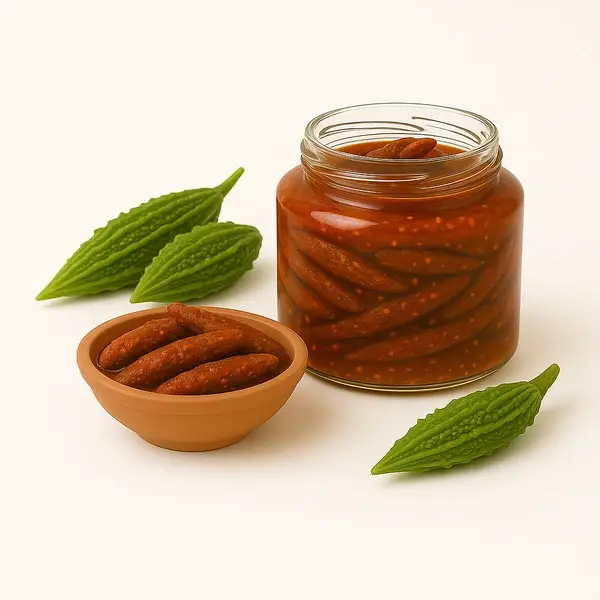
🥒 Karela ka Achar: The Traditional Bitter Gourd Pickle Full of Bold Flavor and Health Benefits 🌶️
Karela ka Achar, also known as Bitter Gourd Pickle, is one of the most unique and traditional Indian pickles known for its bold taste and impressive health benefits. While karela (bitter gourd) is naturally bitter, the traditional pickling process transforms it into a flavorful, spicy, and tangy condiment that many pickle lovers truly appreciate. This traditional Indian pickle perfectly balances bitterness, spice, and tanginess to create a distinctive taste experience.
In Indian households, karela ka achar is not just a side dish—it is considered a health-supporting food prepared using traditional preservation methods. When combined with spices, salt, and mustard oil, the bitterness of karela becomes milder and more enjoyable, making it a delicious accompaniment to everyday meals like dal-chawal, roti, paratha, and khichdi 🍛.
Among traditional Indian pickles, karela pickle is often valued for both its taste and its traditional association with digestive wellness. Prepared using simple ingredients and time-tested recipes, this achar reflects the deep knowledge of Indian kitchens where even bitter vegetables are transformed into something delicious.
🥒 What is Karela ka Achar?
Karela ka achar is a traditional Indian pickle made using fresh bitter gourd (karela), salt, spices, and mustard oil. The karela is usually cut into small pieces or slices, salted to reduce bitterness, and then mixed with aromatic Indian spices.
This pickle is known for its bold taste profile:
✔️ Slight bitterness from karela
✔️ Spicy warmth from chilli and mustard
✔️ Tangy notes from traditional spices
✔️ Rich aroma from mustard oil
As the pickle matures, the bitterness becomes less sharp, the spices blend deeply, and the flavor becomes more balanced. This slow maturation is what makes traditional karela pickle special.
🏺 Cultural Importance of Karela Pickle in Indian Food Tradition
Karela has been part of Indian diets for centuries. While many people may avoid karela because of its bitterness, traditional Indian cooking developed methods like pickling to make it more enjoyable.
In many households, karela pickle is prepared during seasons when fresh bitter gourd is easily available. Families prepare jars of achar that last for months, ensuring that seasonal vegetables are not wasted.
Traditional Indian food philosophy believes that all tastes—including bitter—are important for balanced nutrition. Karela pickle represents this idea perfectly, showing how bitterness can be transformed into something enjoyable through spices and preservation.
In many homes, elders especially appreciate karela pickle because of its traditional association with digestive balance and metabolism support 🌿.
🌶️ Why Karela is Used for Pickling
Karela is ideal for pickling because:
✔️ It has firm texture
✔️ It absorbs spices well
✔️ It has natural medicinal value
✔️ It keeps well after processing
✔️ Its bitterness balances spicy flavors
The pickling process helps reduce excessive bitterness while preserving the vegetable.
🥒 Selecting the Best Karela for Pickle
Choosing the right karela is important for quality pickle.
Ideal karela should be:
✔️ Fresh and firm
✔️ Medium sized
✔️ Dark green
✔️ Free from soft spots
✔️ Not overly ripe
Small to medium karela usually works best because they are less bitter and more tender.
Fresh karela ensures better texture and flavor after pickling.
🌿 Key Ingredients in Traditional Karela Pickle
Authentic karela pickle uses simple but powerful ingredients.
Main ingredients:
🥒 Fresh karela
🧂 Salt
🌶️ Red chilli powder
🌿 Turmeric powder
Traditional spices:
✔️ Mustard seeds
✔️ Fenugreek seeds
✔️ Fennel seeds
✔️ Nigella seeds (kalonji)
✔️ Asafoetida
Oil:
🛢️ Mustard oil is traditionally preferred because:
✔️ It increases shelf life
✔️ Enhances flavor
✔️ Acts as preservative
✔️ Adds strong aroma
Each ingredient plays a specific role in taste and preservation.
🏺 Traditional Method of Preparing Karela ka Achar
The preparation process follows traditional Indian pickle techniques.
Step 1: Washing and Cutting 🥒
Karela is washed thoroughly and cut into:
-
Thin rounds
-
Small cubes
-
Long slices
Seeds may be removed depending on preference.
Step 2: Reducing Bitterness 🧂
Salt is mixed with karela and left for several hours. This helps:
✔️ Remove excess bitterness
✔️ Remove moisture
✔️ Improve texture
Sometimes karela is lightly squeezed after salting.
Step 3: Drying ☀️
Karela pieces are dried for a few hours to remove surface moisture. This improves shelf life.
Step 4: Preparing the Spice Mix 🌶️
Whole spices are lightly roasted and coarsely ground. This improves aroma and taste.
Step 5: Mixing Oil and Spices 🛢️
Karela pieces are mixed with:
-
Spice mixture
-
Mustard oil
-
Additional salt if needed
Everything is mixed thoroughly.
Step 6: Sun Maturation ☀️
The pickle is stored in clean glass jars and kept in sunlight for several days.
This allows:
✔️ Flavor development
✔️ Natural preservation
✔️ Spice absorption
🌶️ Taste Development During Pickle Maturation
Karela pickle changes significantly over time.
Initially:
✔️ Bitter taste dominant
✔️ Strong spice flavor
✔️ Firm texture
After maturation:
✔️ Bitterness reduces
✔️ Spice becomes balanced
✔️ Texture improves
✔️ Flavor deepens
Properly matured karela pickle becomes pleasantly bitter rather than harsh.
❤️ Health Benefits of Karela Pickle
When consumed in moderation, karela pickle offers traditional health benefits.
Possible benefits include:
✔️ Supports digestion
✔️ Traditionally linked to blood sugar balance
✔️ Rich in fiber
✔️ May support metabolism
✔️ Helps appetite stimulation
Karela has long been valued in traditional diets for wellness support.
⚠️ Because pickle contains salt and oil, moderation is important.
🍛 Best Ways to Eat Karela Pickle
Karela pickle pairs best with simple Indian meals.
Popular combinations:
🍚 Dal and rice
🫓 Roti or paratha
🥣 Khichdi
🥛 Curd rice
🥘 Simple vegetable meals
A small spoon is usually enough to enhance the meal.
🏡 Storage Tips for Karela Pickle
Proper storage ensures long life.
Important tips:
✔️ Store in airtight glass jars
✔️ Always use dry spoon
✔️ Keep pickle submerged in oil
✔️ Avoid water contact
✔️ Store in dry place
Following these rules keeps pickle fresh for months.
⏳ Shelf Life of Karela Pickle
When properly stored, karela pickle can last:
✔️ 6 months
✔️ 9 months
✔️ Up to 1 year
Shelf life depends on:
-
Salt level
-
Oil level
-
Moisture exposure
-
Storage hygiene
Traditional pickles often taste better with age.
🌍 Regional Variations of Karela Pickle
Different regions prepare karela pickle differently.
North Indian Style
✔️ Mustard oil based
✔️ Strong spices
Rajasthani Style
✔️ Very spicy
✔️ Oil rich
Gujarati Style
✔️ Slightly balanced bitterness
✔️ Sometimes mild sweetness
Each version reflects local taste traditions.
🌟 Why Karela Pickle Remains Popular
Karela pickle remains popular because:
✔️ Unique taste
✔️ Traditional preparation
✔️ Long shelf life
✔️ Strong flavor
✔️ Health association
It is especially loved by people who enjoy traditional pickles.
🏪 Karela Pickle in Modern Times
Today karela pickle is gaining renewed interest.
Reasons include:
✔️ Interest in traditional foods
✔️ Preference for homemade style pickles
✔️ Demand for preservative-free products
✔️ Growing awareness of traditional vegetables
Many consumers now prefer authentic Indian pickles over processed condiments.
⚠️ Common Mistakes to Avoid While Making Karela Pickle
Common mistakes include:
❌ Not removing moisture
❌ Using overripe karela
❌ Not adding enough salt
❌ Using wet jars
❌ Not heating oil properly
Avoiding these ensures better shelf life.
🥒 Difference Between Karela Pickle and Other Vegetable Pickles
Karela pickle stands out because:
✔️ It includes bitter taste
✔️ Has strong spice absorption
✔️ Unique texture
✔️ Traditional health value
Unlike mango pickle (tangy) or chilli pickle (spicy), karela pickle offers a rare bitter-spicy balance.
🌿 Why Traditional Pickle Making Still Matters
Traditional pickle making teaches:
✔️ Patience
✔️ Ingredient quality
✔️ Preservation methods
✔️ Seasonal eating
✔️ Food sustainability
These lessons remain valuable even today.
📈 Growing Demand for Traditional Indian Pickles
Modern consumers are returning to:
✔️ Homemade foods
✔️ Natural ingredients
✔️ Traditional recipes
✔️ Regional specialties
This trend is increasing demand for pickles like karela ka achar.
🏆 How Karela Pickle Reflects Indian Food Philosophy
Indian cuisine values balance of all tastes:
✔️ Sweet
✔️ Sour
✔️ Salty
✔️ Bitter
✔️ Spicy
Karela pickle represents the bitter taste, which is often missing in modern diets.
Traditional diets believed bitter foods help balance overall nutrition.
Conclusion 🌶️
Karela ka Achar is one of the most distinctive traditional Indian pickles, combining bold flavor, deep spice, and traditional wisdom. Through the careful use of spices, salt, and mustard oil, the natural bitterness of karela is transformed into a flavorful and enjoyable condiment.
With its strong taste, long shelf life, and traditional preparation, karela pickle continues to remain a valued part of Indian meals. Whether enjoyed with dal-chawal, paratha, or simple home food, this pickle proves that even the most bitter ingredients can become delicious when prepared with care.
More than just a pickle, karela ka achar represents Indian culinary heritage, traditional knowledge, and the art of transforming simple vegetables into something extraordinary 🌿.