
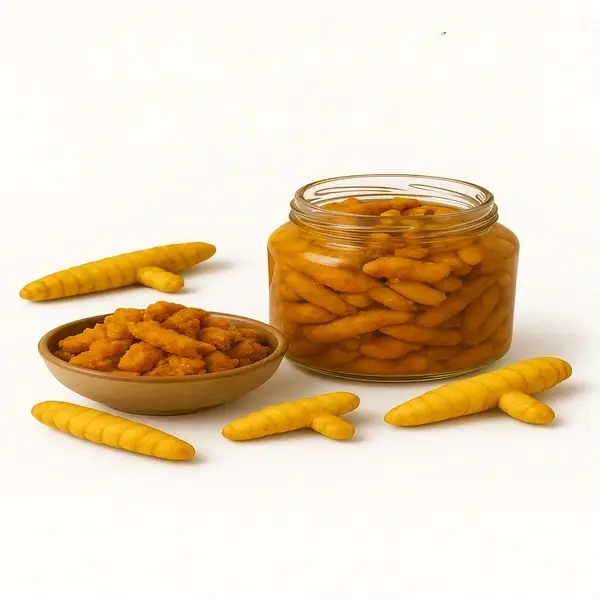
🌿 Turmeric Pickle: The Traditional Haldi ka Achar Full of Flavor and Wellness 💛
Turmeric Pickle, popularly known as Haldi ka Achar, is one of the most unique and health-valued traditional Indian pickles. Made from fresh raw turmeric roots, green chillies, lemon juice, spices, and mustard oil, this pickle is known for its earthy flavor, mild spice, and strong traditional wellness association. Unlike common pickles, it stands out because of its vibrant yellow color, medicinal reputation, and distinctive taste.
In Indian households, haldi ka achar is not just eaten for taste but also valued because turmeric has been part of traditional diets for centuries. This pickle is especially popular during winter when fresh turmeric is available. A small portion of it served with dal, roti, paratha, or khichdi can add both flavor and warmth to a meal 🍛.
Among traditional Indian pickles, it is appreciated for its natural ingredients, simple preparation, and traditional importance in Indian food culture.
🌿 What is Turmeric Pickle?
Turmeric pickle is a traditional Indian achar made from fresh raw turmeric roots (kacchi haldi), spices, salt, lemon juice, and mustard oil. Sometimes fresh ginger is also added to enhance flavor.
This pickle is known for its distinctive taste profile:
✔️ Earthy taste from raw turmeric
✔️ Mild heat from green chillies
✔️ Tangy freshness from lemon
✔️ Rich aroma from mustard oil
As the pickle matures, the raw sharpness of turmeric becomes milder and blends with spices to create a balanced and flavorful achar. This natural maturation is what makes traditional haldi pickle special.
🏺 Cultural Importance of Haldi ka Achar
Turmeric holds a very special place in Indian culture. It is not only used in cooking but also in traditional rituals and home remedies. Because of this, it has long been valued in Indian households.
Traditionally, turmeric pickle is prepared during winter because fresh turmeric becomes available in markets. Families prepare small batches to enjoy seasonal freshness and preserve it for months.
In many homes, it is considered a seasonal specialty. It is often served with simple homemade meals to add both flavor and traditional goodness 🌿.
🌿 Why Raw Turmeric is Ideal for Pickling
Fresh turmeric is ideal for pickling because:
✔️ It has strong natural flavor
✔️ It absorbs spices well
✔️ It softens during maturation
✔️ It has traditional wellness value
✔️ It develops deeper taste over time
The pickling process reduces the harsh raw taste and makes turmeric more pleasant to eat.
🌿 Selecting the Best Turmeric for Pickle
Choosing good quality turmeric is very important.
Ideal turmeric roots should be:
✔️ Fresh and firm
✔️ Bright orange or deep yellow inside
✔️ Smooth skin
✔️ Not dry or shriveled
✔️ Free from fungus
Fresh turmeric gives better color, taste, and shelf life.
Tender roots are easier to cut and absorb spices better.
🌿 Key Ingredients in Traditional Turmeric Pickle
Authentic it uses simple ingredients.
Main ingredients:
🌿 Fresh raw turmeric
🌶️ Green chillies
🍋 Lemon juice
🧂 Salt
Traditional spices:
✔️ Mustard seeds
✔️ Fenugreek seeds
✔️ Fennel seeds
✔️ Turmeric powder (for extra color)
✔️ Asafoetida
Oil:
🛢️ Mustard oil is traditionally used because:
✔️ It improves shelf life
✔️ Enhances flavor
✔️ Adds pungent aroma
✔️ Acts as natural preservative
These ingredients together create the signature taste of haldi ka achar.
🏺 Traditional Method of Preparing Turmeric Pickle
The preparation process follows classic Indian pickle traditions.
Step 1: Cleaning the Turmeric 🌿
Fresh turmeric roots are washed thoroughly to remove soil. They are then dried completely.
Step 2: Peeling and Cutting 🔪
Turmeric is peeled and cut into:
-
Thin slices
-
Small sticks
-
Small cubes
Uniform cutting helps even flavor absorption.
Step 3: Preparing the Chillies 🌶️
Green chillies are washed, dried, and cut into pieces or slit lengthwise.
Step 4: Preparing Spice Mix 🌶️
Whole spices are lightly roasted and coarsely ground to enhance aroma.
Step 5: Mixing Ingredients 🛢️
Turmeric and chillies are mixed with:
-
Spice mixture
-
Salt
-
Lemon juice
-
Mustard oil
Everything is mixed thoroughly to ensure proper coating.
Step 6: Maturation ☀️
The pickle is stored in clean glass jars and sometimes kept in sunlight for a few days.
This helps:
✔️ Flavor development
✔️ Spice absorption
✔️ Texture improvement
✔️ Natural preservation
🌶️ Taste Development During Pickle Maturation
Turmeric pickle changes in taste as it matures.
Initially:
✔️ Strong raw turmeric taste
✔️ Sharp lemon tang
✔️ Firm texture
After maturation:
✔️ Flavor becomes balanced
✔️ Turmeric softens
✔️ Spice blends evenly
✔️ Taste becomes rich
Proper maturation gives the best flavor.
❤️ Health Benefits of Turmeric Pickle
When eaten in moderation, it is traditionally associated with wellness.
Possible benefits include:
✔️ Supports digestion
✔️ Traditionally linked to immunity
✔️ May support metabolism
✔️ Contains natural antioxidants
✔️ Helps appetite stimulation
Turmeric has been valued in Indian diets for centuries.
⚠️ Because pickle contains salt and oil, moderation is recommended.
🍛 Best Ways to Eat Turmeric Pickle
Turmeric pickle pairs best with simple Indian meals.
Popular combinations:
🍚 Dal and rice
🫓 Roti or paratha
🥣 Khichdi
🥛 Curd rice
🌾 Bajra roti
A small quantity is enough due to strong flavor.
🏡 Storage Tips for Turmeric Pickle
Proper storage ensures longer shelf life.
Important tips:
✔️ Store in airtight glass jars
✔️ Always use dry spoon
✔️ Keep pickle covered in oil or lemon juice
✔️ Avoid moisture
✔️ Store in cool dry place
Following these rules keeps pickle fresh for months.
⏳ Shelf Life of Turmeric Pickle
When stored properly, it can last:
✔️ 3–6 months (lemon based)
✔️ Up to 9 months (oil based)
Shelf life depends on:
-
Oil level
-
Salt level
-
Storage hygiene
-
Moisture exposure
Fresh turmeric pickles are usually consumed earlier for best taste.
🌍 Regional Variations of Turmeric Pickle
Different regions prepare turmeric pickle differently.
North Indian Style
✔️ Mustard oil based
✔️ Spicy
Rajasthani Style
✔️ Strong spices
✔️ Oil rich
Gujarati Style
✔️ Lemon heavy
✔️ Mild spice
South Indian Style
✔️ Sesame oil
✔️ Curry leaf flavor
Each variation reflects regional taste traditions.
🌟 Why Turmeric Pickle Remains Popular
Turmeric pickle remains popular because:
✔️ Unique flavor
✔️ Traditional importance
✔️ Seasonal specialty
✔️ Natural ingredients
✔️ Strong color appeal
It is especially loved by people who enjoy traditional Indian pickles.
🏪 Turmeric Pickle in Modern Times
Today it is gaining popularity because:
✔️ People prefer traditional foods
✔️ Interest in natural ingredients is rising
✔️ Demand for homemade pickles is increasing
✔️ Awareness of turmeric benefits is growing
Many customers now prefer authentic Indian pickles instead of processed condiments.
⚠️ Common Mistakes to Avoid While Making Turmeric Pickle
Common mistakes include:
❌ Using wet turmeric
❌ Not drying jars
❌ Using too little salt
❌ Not adding enough oil
❌ Exposure to moisture
Avoiding these improves shelf life.
🌿 Difference Between Turmeric Pickle and Ginger Pickle
Turmeric pickle:
✔️ Earthy taste
✔️ Bright yellow color
✔️ Mild bitterness
Ginger pickle:
✔️ Sharp spicy taste
✔️ Strong aroma
✔️ Slight sweetness
Both are popular but turmeric pickle has a more earthy profile.
🌿 Why Traditional Pickle Making Still Matters
Traditional pickle making teaches:
✔️ Patience
✔️ Ingredient quality
✔️ Natural preservation
✔️ Traditional knowledge
✔️ Seasonal eating
These lessons remain important today.
📈 Growing Demand for Traditional Indian Pickles
Modern consumers are moving toward:
✔️ Homemade food
✔️ Preservative free products
✔️ Authentic recipes
✔️ Traditional flavors
This trend is increasing demand for turmeric pickle.
🏆 How Turmeric Pickle Reflects Indian Food Philosophy
Indian cuisine values balance and natural ingredients.
Turmeric pickle represents:
✔️ Earthy taste
✔️ Spice balance
✔️ Traditional preservation
✔️ Natural wellness foods
It shows how simple roots can create powerful flavors.
Conclusion 🌿💛
Turmeric Pickle (Haldi ka Achar) is one of the most unique traditional Indian pickles, combining earthy flavor, vibrant color, and deep culinary heritage. Through the careful use of spices, lemon, salt, and mustard oil, fresh turmeric is transformed into a flavorful and aromatic condiment.
With its traditional preparation, bold taste, and seasonal importance, turmeric pickle continues to remain a valued part of Indian kitchens. Whether eaten with dal-chawal, paratha, or everyday home meals, this pickle proves that traditional ingredients can create exceptional flavors.
More than just a pickle, haldi ka achar represents Indian food wisdom, traditional spice knowledge, and the timeless art of natural food preservation 🌿.