
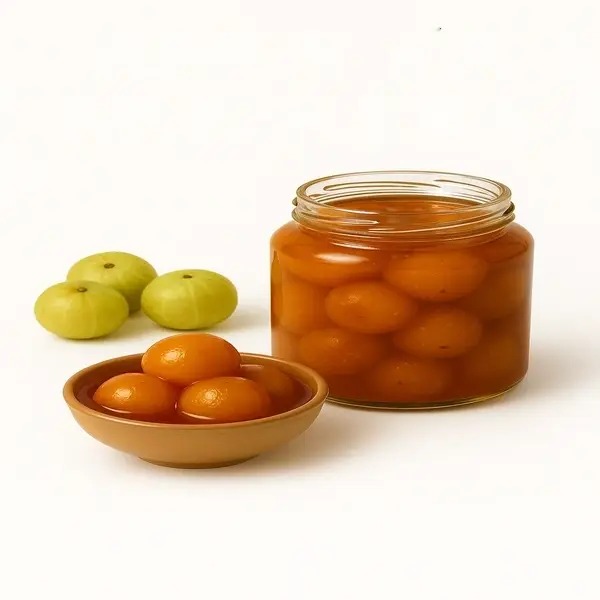
🍈 Amla ka Murabba: A Traditional Indian Sweet Preserving Health and Heritage
Amla ka Murabba is one of the most cherished traditional Indian preserves, known equally for its exceptional health benefits and delightful sweet taste. Prepared from fresh Indian gooseberries (amla) cooked slowly in sugar syrup and delicately flavored with traditional spices, amla murabba has been a staple in Indian households for centuries. Unlike modern sweet spreads or processed foods, this murabba represents the wisdom of Indian kitchens where taste and wellness were never treated separately.
Amla murabba is especially popular in North India and Rajasthan, where it is consumed daily as a natural health supplement. From elders to children, amla ka murabba is valued for supporting digestion, immunity, eyesight, and overall vitality. Its glossy appearance, soft texture, and balanced sweetness make it both nourishing and enjoyable.
🍈 What Is Amla ka Murabba?
Amla ka murabba is a traditional Indian sweet preserve made by slow-cooking whole or segmented amla in sugar syrup until the fruit becomes soft, translucent, and infused with sweetness. The natural sourness and slight bitterness of amla are carefully balanced during cooking, resulting in a murabba that is mildly sweet, pleasantly tangy, and easy to digest.
Unlike jam or candy, amla murabba retains the whole fruit structure, making it rich in fiber and nutrients. It is not eaten in large quantities but enjoyed in small portions, often as part of the daily diet.
🏺 Cultural and Traditional Importance of Amla Murabba
In traditional Indian culture, amla is regarded as a sacred fruit with medicinal value. Preparing amla murabba was a seasonal ritual, usually done in winter when fresh amla was abundantly available. Families would buy large quantities of amla, clean them carefully, and prepare murabba in large utensils over slow heat.
Amla murabba was often stored in ceramic or glass jars and consumed throughout the year. Elders especially believed that regular consumption of amla murabba helped maintain strength, eyesight, digestion, and longevity. In many homes, starting the day with one piece of amla murabba became a daily habit passed down through generations.
🍈 Understanding Amla (Indian Gooseberry)
Amla, also known as Indian gooseberry, is a small, round, green fruit with a firm texture and a unique taste that is sour, slightly bitter, and astringent.
Key characteristics of amla:
-
-
-
Extremely rich in natural antioxidants
-
High fiber content
-
Naturally acidic
-
Strong medicinal reputation
-
-
Because of its dense structure, amla is ideal for slow cooking and preservation. When prepared as murabba, the fruit absorbs sugar syrup while retaining its nutritional value.
🍬 Ingredients Used in Authentic Amla ka Murabba
Traditional amla murabba uses very few ingredients, which is why quality matters.
🍈 Fresh Amla
-
-
-
Firm, fresh, and blemish-free
-
Properly washed and cleaned
-
-
🍚 Sugar
-
-
-
Acts as a natural preservative
-
Balances sourness
-
Helps soften the fruit
-
-
🌿 Optional Natural Flavoring
-
-
-
Cardamom
-
Saffron
-
Rose water
-
-
No artificial colors or preservatives are required in authentic amla murabba.
🏺 Traditional Preparation Process of Amla ka Murabba
Fresh amla is washed thoroughly and boiled or steamed until slightly tender. This step reduces bitterness and makes the fruit easier to absorb syrup.
Step 2: Separating the Segments
Once cooled, the amla is gently separated into segments by removing the seed.
Step 3: Soaking in Sugar
The amla pieces are mixed with sugar and left overnight. The sugar draws out moisture and forms a natural syrup.
Step 4: Slow Cooking
The mixture is cooked on low flame until the syrup thickens and the amla becomes translucent and soft.
Step 5: Flavoring and Cooling
Natural flavorings may be added. The murabba is cooled and stored in airtight jars.
This slow process ensures flavor development and long shelf life.
🍯 Taste and Texture of Amla Murabba
Amla ka murabba offers a unique sensory experience:
-
-
-
Mild sweetness balanced with tang
-
Soft, juicy texture
-
Light syrup coating
-
Gentle aromatic notes
-
-
As it matures, the murabba becomes richer in taste and smoother in texture.
🍽️ How to Consume Amla ka Murabba
Amla murabba is traditionally eaten in small portions.
Common ways to consume it:
-
-
-
One piece in the morning on an empty stomach
-
As a sweet accompaniment after meals
-
With warm milk in winter
-
As a natural dessert
-
-
Its sweetness satisfies cravings while providing nourishment.
❤️ Health Benefits of Amla ka Murabba
Amla ka murabba is widely known for its health-supporting properties.
Key benefits:
-
-
-
Supports digestion and gut health
-
Helps strengthen immunity
-
Aids in maintaining eyesight
-
Supports metabolism
-
Helps improve appetite
-
Traditionally believed to promote longevity
-
-
Because it is prepared using slow cooking and natural preservation, amla murabba retains much of its nutritional value.
⚠️ Due to sugar content, moderation is advised, especially for those monitoring sugar intake.
🏡 Storage and Shelf Life of Amla Murabba
Proper storage ensures long-lasting quality:
-
-
-
Store in clean, airtight glass jars
-
Use a dry spoon always
-
Keep away from moisture
-
Store at room temperature
-
-
When stored correctly, amla ka murabba can last 6 months to over a year without spoilage.
🌿 Amla Murabba in Ayurvedic Tradition
In Ayurveda-inspired diets, amla murabba is often recommended as a natural tonic. It is believed to balance digestion, support internal cleansing, and provide nourishment during seasonal changes. Many households include it as part of daily routine rather than an occasional sweet.
🌍 Amla ka Murabba in Modern Times
Even in today’s fast-paced lifestyle, amla murabba remains relevant:
-
-
-
Preferred by health-conscious consumers
-
Used as a natural alternative to processed sweets
-
Valued for its traditional preparation
-
Enjoyed across all age groups
-
-
Despite modern supplements and packaged foods, amla murabba continues to be trusted for its natural goodness.
🌟 Why Amla ka Murabba Has Endured Generations
Amla murabba has survived centuries because it:
-
-
-
Combines taste with nutrition
-
Uses minimal natural ingredients
-
Preserves seasonal fruit effectively
-
Reflects Indian food wisdom
-
-
It proves that traditional methods can be both simple and powerful.
✨ Conclusion
Amla ka murabba is a timeless Indian preserve that beautifully balances sweetness, health, and tradition. Made with care, patience, and natural ingredients, it stands as a reminder of how food can nourish the body while delighting the senses.
Whether consumed daily for wellness or occasionally as a sweet treat, amla murabba continues to hold a respected place in Indian kitchens. A small portion carries centuries of wisdom, making it more than just a sweet—it is a heritage food worth preserving.