
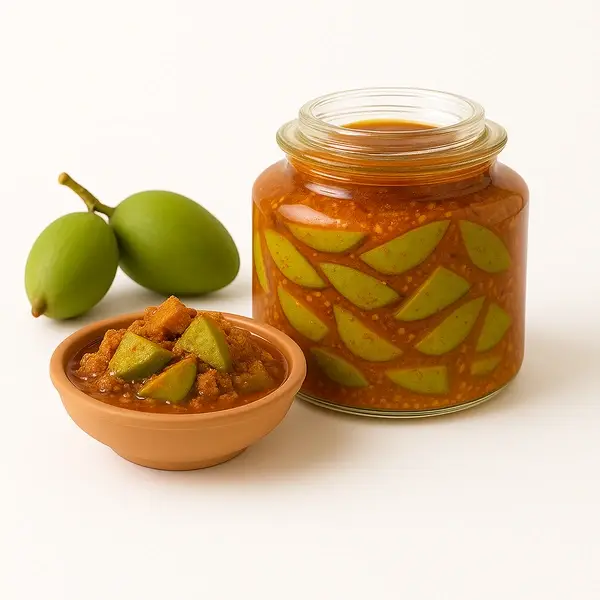
🥭 Mango Pickle (Aam ka Achar): The Soul of Indian Flavors and Tradition
Mango Pickle, popularly known as Aam ka Achar, is one of the most iconic and beloved condiments in Indian cuisine. Found in almost every Indian household, it is not just food—it is a tradition passed down through generations. Its bold spice, tangy sharpness, and rich aroma instantly evoke memories of home-cooked meals, summer afternoons, and pickle jars resting under the sun.
Prepared using raw mangoes, aromatic spices, salt, and oil, it reflects the wisdom of traditional Indian food preservation. Long before refrigeration, families relied on pickling to store seasonal produce, and it became a staple that lasted throughout the year. Even today, despite modern food habits, aam ka achar remains irreplaceable on the Indian dining table.
🥭 What Is Mango Pickle?
It is a traditional Indian condiment made from raw, unripe mangoes that are cut into pieces and preserved with spices, salt, and oil. The natural sourness of raw mango makes it ideal for pickling, as it balances spices and supports long shelf life.
There are many styles of it, but the essence remains the same—strong, spicy, tangy, and deeply satisfying. Over time, the mango pieces soften, absorb the spices, and develop a mature flavor that improves with age.
🏺 Cultural Significance of Mango Pickle in India
It holds a special cultural place in Indian households. Pickle-making was traditionally a seasonal ritual, usually done in summer when raw mangoes were abundant. Families would come together to wash, cut, dry, and spice mangoes, turning the process into a shared activity filled with stories, care, and experience.
Each household had its own recipe—some spicier, some saltier, some oil-rich, and some dry. These recipes were rarely written down; instead, they were passed orally from elders to younger generations. The taste of aam ka achar often reminds people of their grandmother’s kitchen, village homes, and simple meals eaten with love.
🥭 Selecting the Right Mangoes for Pickling
The quality of it depends largely on the type of mango used.
Ideal raw mango characteristics:
-
-
-
Firm and hard texture
-
Sour taste
-
Fibrous flesh
-
Green skin with no ripeness
-
-
Overripe or soft mangoes are avoided, as they spoil quickly and do not preserve well. Traditionally, locally grown seasonal mangoes are preferred for the best flavor.
🌾 Spices Used in Authentic Mango Pickle
Spices give mango pickle its distinctive identity. Whole spices are often lightly roasted and coarsely ground to retain aroma and texture.
Commonly used spices:
-
-
-
Mustard seeds – sharp pungency and preservation
-
Fenugreek seeds – mild bitterness and depth
-
Fennel seeds – subtle sweetness and aroma
-
Turmeric – color and antimicrobial properties
-
Asafoetida – enhances flavor and digestion
-
-
These spices not only define the taste but also play a role in natural preservation.
🛢️ Role of Oil in Mango Pickle
Oil is essential in mango pickle preparation. Traditionally, cold-pressed mustard oil is widely used in North India, while sesame oil is preferred in some southern regions.
Importance of oil:
-
-
-
Acts as a natural preservative
-
Prevents moisture contact
-
Enhances spice absorption
-
Improves shelf life
-
-
The oil forms a protective layer around mango pieces, allowing the pickle to mature slowly and safely.
🏺 Traditional Preparation Process of Mango Pickle
Step 1: Cleaning and Cutting
Raw mangoes are washed thoroughly, wiped dry, and cut into uniform pieces. The seed portion is often included, as it adds flavor during maturation.
Step 2: Drying
Mango pieces are sun-dried or air-dried to remove surface moisture, which helps prevent spoilage.
Step 3: Spice Preparation
Whole spices are roasted lightly and ground coarsely. Salt and turmeric are mixed in.
Step 4: Mixing
Mango pieces are mixed thoroughly with the spice blend and oil until evenly coated.
Step 5: Sun Maturation
The pickle is stored in clean glass or ceramic jars and kept under sunlight for several days. This allows flavors to blend naturally.
Step 6: Aging
Over weeks and months, the mango softens, spices mellow, and the pickle develops a deep, rich flavor.
🌶️ Taste Profile of Mango Pickle
It offers a bold and layered taste:
-
-
-
Tangy from raw mango
-
Spicy from chillies and mustard
-
Slightly bitter from fenugreek
-
Rich and aromatic due to oil
-
-
As it ages, the sharpness reduces and the flavors become more rounded and balanced.
🍽️ How Mango Pickle Is Traditionally Eaten
It is eaten in small quantities but leaves a strong impact.
It pairs perfectly with:
-
-
-
Plain roti or paratha
-
Dal and rice
-
Khichdi
-
Curd rice
-
-
Even a small piece can transform a simple meal into something memorable.
❤️ Health Aspects of Mango Pickle (When Consumed in Moderation)
When consumed in moderation, It offers some benefits:
-
-
-
Raw mango supports digestion
-
Spices stimulate appetite
-
Oil helps absorb fat-soluble nutrients
-
Fermentation supports gut health
-
-
⚠️ Due to salt and oil content, moderation is important.
🏡 Storage and Shelf Life of Mango Pickle
Proper storage is essential for longevity:
-
-
-
Store in airtight glass jars
-
Always use a dry spoon
-
Keep mango pieces submerged in oil
-
Avoid moisture exposure
-
-
Well-stored It can last 12 months to over a year, often improving in taste with time.
🌍 Regional Variations of Mango Pickle
India’s diversity is reflected in its it styles:
-
-
-
North Indian style: spicy, mustard-oil based
-
Rajasthani style: bold, oil-rich, intense
-
South Indian style: sesame oil, slightly tangy
-
Gujarati style: mildly sweet and spicy
-
-
Despite variations, mango pickle remains universally loved.
🌟 Why Mango Pickle Remains Timeless
Mango pickle has endured generations because it:
-
-
-
Uses seasonal produce
-
Preserves food naturally
-
Enhances simple meals
-
Reflects cultural heritage
-
-
It is a perfect example of traditional Indian food wisdom.
🥭 Mango Pickle in Modern Times
Even today, mango pickle continues to be relevant:
-
-
-
Loved across age groups
-
Served in homes and restaurants
-
Valued for its authentic taste
-
Preferred for its long shelf life
-
-
Despite modern food trends, aam ka achar remains unmatched.
✨ Conclusion
Mango pickle is more than a condiment—it is a celebration of tradition, patience, and bold flavor. Made with raw mangoes, aromatic spices, oil, and time, aam ka achar captures the essence of Indian kitchens like no other food.
A single spoon of mango pickle carries tang, spice, and nostalgia, making it a timeless companion to everyday meals. From village homes to modern kitchens, mango pickle continues to hold a cherished place on the Indian dining table.